

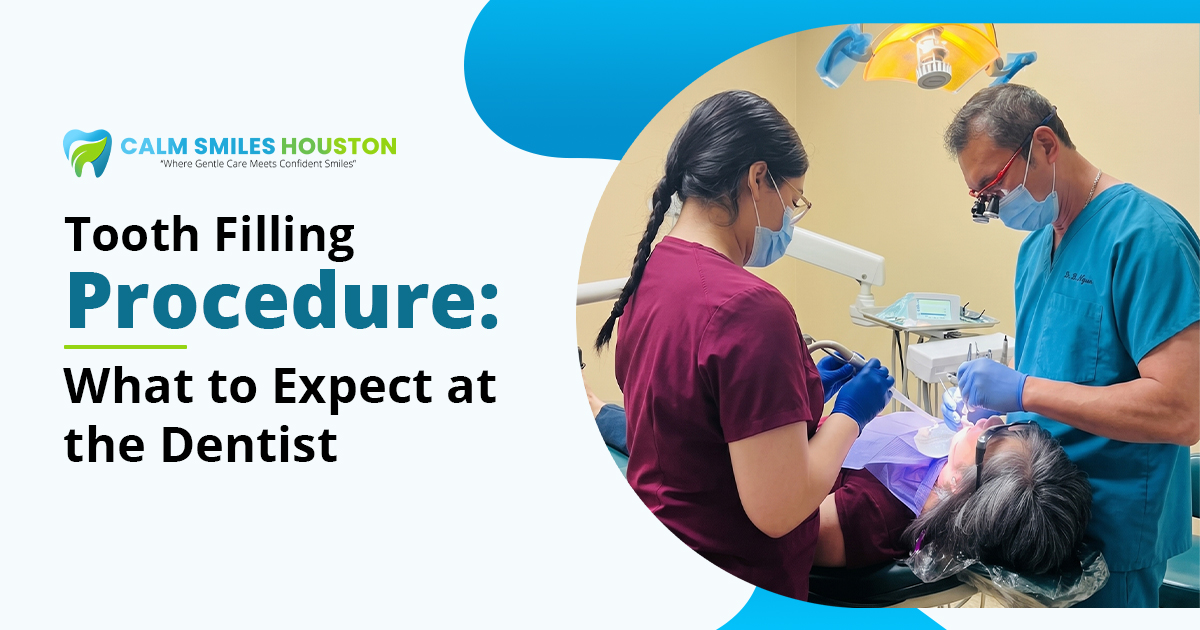
If your dentist told you that you need a filling, do not panic. A tooth filling procedure is one of the most common restorative dental treatments used to repair a cavity, minor tooth damage, or a small fracture. The goal is simple: remove the damaged or decayed part of the tooth, clean the area, and restore the tooth with a filling material so it can function normally again.
A dental filling is used to repair a small hole or cavity in a tooth. The dentist removes the decayed tooth tissue and fills the space with a suitable filling material.
For many patients, the fear is worse than the treatment itself. The procedure is usually straightforward, often completed in one visit, and local anesthesia can be used to numb the area so treatment is more comfortable. Local anesthesia blocks pain signals in the treated area and is commonly used for cavity fillings and other dental procedures.
At Calm Smiles Houston General Dentistry, patients can receive gentle evaluation and restorative dental care at 14095 Northwest Fwy, Suite D, Houston, TX 77040. To schedule an appointment, call 713-460-0400.
Quick Answer: What Happens During a Tooth Filling Procedure?
A tooth filling procedure usually follows these steps:
- The dentist examines the tooth and confirms the cavity or damage.
- The area is numbed with local anesthesia if needed.
- The decayed or weakened tooth structure is removed.
- The tooth is cleaned and prepared.
- Filling material is placed into the tooth.
- The filling is shaped, hardened, and polished.
- Your bite is checked to make sure the filling feels comfortable.
Most simple fillings are completed in one appointment. The exact time depends on the size of the cavity, the tooth location, the material used, and whether there are multiple teeth being treated.
What Is a Dental Filling?
A dental filling is a restorative material placed inside a tooth after decay or minor damage has been removed. It helps restore the tooth’s shape, strength, and function.
Dental fillings may be recommended for:
- Cavities caused by tooth decay
- Minor chips or cracks
- Worn tooth surfaces
- Small areas of enamel breakdown
- Replacing old or damaged fillings
- Protecting a tooth after minor structural damage
Cavities form when plaque bacteria produce acids that attack tooth enamel. Over time, enamel can break down and create a hole in the tooth.
Here is the hard truth: ignoring a cavity does not make it “settle down.” Cavities usually grow. MedlinePlus notes that cavities may not hurt unless they become large, affect nerves, or contribute to a tooth fracture. Untreated tooth decay can also lead to infection or an abscess.
That means waiting for pain is a bad strategy. Pain often shows up after the problem has already become more serious.
Common Signs You May Need a Tooth Filling
You may need a dental filling if you notice:
- Tooth sensitivity to cold, hot, or sweet foods
- Pain when biting down
- A visible hole or dark spot on a tooth
- Food is getting stuck in the same area
- Rough, sharp, or chipped tooth edges
- Floss tearing between certain teeth
- A lost or broken old filling
- Mild toothache that comes and goes
Some cavities have no obvious symptoms in the early stage. That is why routine dental exams matter. A dentist can detect decay before it becomes painful or expensive to treat.
If you have severe pain, swelling, fever, facial swelling, or trauma, do not wait for a routine appointment. Contact an emergency dentist in Houston right away.
Why Getting a Filling Early Matters
A filling is usually recommended when decay is still limited enough that the tooth can be restored conservatively. Treating the cavity early helps preserve more natural tooth structure.
If decay is ignored, it may spread deeper into the tooth and reach the pulp, where the nerves and blood vessels are located. At that point, a simple filling may no longer be enough. You may need more advanced treatment, such as a crown, root canal therapy, or in severe cases, tooth extraction in Houston.
A filling is not just about fixing a hole. It helps:
- Stop decay from progressing
- Restore chewing function
- Reduce sensitivity
- Protect the tooth from further damage
- Prevent bacteria from collecting in the cavity
- Preserve natural tooth structure
Do not treat a filling recommendation like a casual suggestion. If the dentist has shown you decay on an X-ray or exam, delaying treatment is usually how a small problem becomes a bigger bill.
Step-by-Step Tooth Filling Procedure
Step 1: Dental Exam and Diagnosis
Your dentist first examines the tooth. This may include a visual exam, dental explorer, intraoral images, bitewing X-rays, or cavity-detecting tools.
The dentist checks:
- Size of the cavity
- Depth of decay
- Tooth location
- Whether the nerve may be involved
- Condition of nearby teeth
- Bite pressure on the tooth
- Whether a filling is enough or a different treatment is needed
If the cavity is small or moderate, a filling may be appropriate. If the tooth has extensive structural damage, your dentist may discuss crowns, inlays, onlays, or other restorative options.
Step 2: Numbing the Tooth
For many fillings, especially deeper cavities, the dentist uses local anesthesia to numb the tooth and the surrounding gum area. A topical gel may be placed first before the injection to reduce discomfort.
Local anesthesia does not put you to sleep. You stay awake, but the area being treated becomes numb. The American Dental Association’s patient resource explains that local anesthesia prevents pain in a specific area by blocking nerves that sense or transmit pain.
Patients with dental anxiety may also ask about comfort options. If fear has been keeping you away from care, sedation dentistry in Houston may be worth discussing with your dentist.
Step 3: Removing the Decay
Once the area is numb, the dentist removes the decayed or weakened tooth structure. This is usually done with dental instruments or a dental handpiece.
The goal is to remove infected or softened tooth material while preserving as much healthy tooth structure as possible. This is where skill matters. A rushed or careless filling is not what you want. The tooth must be cleaned properly before the filling is placed.
Step 4: Cleaning and Preparing the Tooth
After decay is removed, the dentist cleans the area. The preparation depends on the filling material being used.
For a tooth-colored composite filling, the dentist may apply a bonding agent that helps the filling attach to the tooth. Composite material is usually placed in layers and hardened with a special curing light.
For other materials, the technique may differ. Your dentist will select the material based on the tooth’s condition, location, chewing forces, cosmetic needs, cost, and your preferences.
The American Dental Association explains that filling material choice is individualized and may depend on cavity size, location, appearance, longevity, insurance coverage, and cost.
Step 5: Placing the Filling Material
The dentist places the filling material into the prepared area. For composite resin fillings, the material is shaped to match the natural contours of your tooth.
The dentist carefully rebuilds the missing tooth structure so the tooth can bite and chew properly. A filling that is too high can cause soreness when biting. A filling that is poorly shaped can trap food or irritate the gums.
This is why “cheap and fast” dental work can become expensive later. Good restorative dentistry is not just about filling a hole. It is about rebuilding the tooth correctly.
Step 6: Hardening, Shaping, and Polishing
After the material is placed, the dentist hardens it if needed, shapes it, and polishes the surface.
Then your bite is checked. You may be asked to bite on marking paper so the dentist can see whether the filling is hitting too heavily.
Tell your dentist if something feels high, sharp, or uncomfortable. Do not “just live with it.” A small bite adjustment can prevent soreness and unnecessary pressure on the tooth.
Types of Dental Filling Materials
Different filling materials have different strengths, appearances, costs, and uses.
| Filling Type | Best For | Main Benefit | Consideration |
| Composite resin | Front teeth, visible areas, small to medium cavities | Tooth-colored appearance | May wear faster than some materials in heavy-bite areas |
| Amalgam | Back teeth, high-pressure chewing areas | Strong and durable | Silver-colored appearance |
| Glass ionomer | Small areas, children, root surfaces | Releases fluoride | Less durable for heavy chewing areas |
| Ceramic/porcelain | Larger restorations, cosmetic areas | Strong and natural-looking | Usually costs more |
| Gold | Long-lasting restorations | Very durable | Higher cost and less common |
Dental amalgam has been used for many years, but patients should discuss risks, benefits, and alternatives with their dentist. The FDA states that studies in the general population have not shown conclusive evidence that dental amalgam causes harmful health effects, while also providing specific recommendations and cautions for certain higher-risk groups.
For many modern dental clinics, tooth-colored composite fillings are commonly used because they blend naturally with the smile. However, the best material depends on the clinical situation, not just appearance.
Composite Filling vs. Amalgam Filling
Composite Fillings
Composite fillings are tooth-colored restorations made from resin-based material. They are popular because they can match the shade of your natural teeth.
Composite fillings are often preferred for:
- Front teeth
- Visible smile areas
- Small to medium cavities
- Patients who want a natural-looking result
- Conservative restorations
Amalgam Fillings
Amalgam fillings are silver-colored and known for their durability. They may still be used in certain clinical situations, especially where strength and moisture control are major concerns.
Amalgam may be considered for:
- Back molars
- Larger chewing surfaces
- Patients with heavy bite pressure
- Cases where isolation is difficult
There is no one-size-fits-all answer. A good dentist should explain your options clearly, not push one material without context.
Does a Tooth Filling Hurt?
A tooth filling should not be painful when the tooth is properly numbed. You may feel pressure, vibration, water spray, or movement, but sharp pain should not be ignored.
Tell your dentist immediately if you feel pain during the procedure. More anesthetic may be needed.
After the filling, mild soreness or sensitivity can happen, especially if the cavity was deep. This usually improves as the tooth settles. However, worsening pain, lingering sensitivity, or pain when biting may need a follow-up visit.
How Long Does a Tooth Filling Procedure Take?
A simple tooth filling often takes about 30 to 60 minutes, but timing varies.
Factors that affect appointment length include:
- Number of fillings
- Size of cavity
- Tooth location
- Type of filling material
- Whether old filling material must be removed
- Patient comfort needs
- Complexity of the bite adjustment
If you need multiple fillings, your dentist may complete them in one visit or divide treatment into multiple appointments.
What to Expect After a Filling
After a filling, your mouth may stay numb for a few hours. Be careful while eating or drinking until numbness wears off because you could accidentally bite your cheek, lip, or tongue.
You may notice:
- Mild sensitivity to cold
- Tenderness near the injection site
- Slight gum irritation
- A different feeling when biting
- Minor soreness around the treated tooth
These symptoms are usually temporary. If your bite feels uneven, call your dentist. A high filling is easy to adjust, but ignoring it can create unnecessary pressure and pain.
Tooth Filling Aftercare Tips
Use this checklist after your dental filling:
- Avoid chewing until numbness wears off
- Start with soft foods if your mouth feels sore
- Avoid very sticky foods for the first day
- Brush and floss normally, but gently around the area
- Do not chew ice or hard objects
- Call your dentist if your bite feels high
- Return for regular dental checkups
- Limit frequent sugary snacks and drinks
Good aftercare protects the filling and the tooth. The FDA notes that restoration durability depends on many factors, including oral hygiene, diet, and regular dental checkups.
What Can You Eat After a Filling?
Once numbness wears off, many patients can eat normally. However, if your tooth feels sensitive, choose softer foods for the first day.
Good options include:
- Soup that is warm, not hot
- Yogurt
- Scrambled eggs
- Soft rice
- Pasta
- Smoothies without seeds
- Soft vegetables
- Mashed potatoes
Avoid:
- Hard candy
- Ice
- Sticky caramel
- Chewy gum
- Very hot drinks while numb
- Crunchy foods if the tooth feels tender
If you received a composite filling, it is hardened before you leave the office. Still, your tooth and jaw may feel tired, especially after a longer appointment.
How Long Do Dental Fillings Last?
The lifespan of a filling depends on the material, size, location, oral hygiene, bite pressure, grinding habits, and diet.
Approximate ranges:
| Filling Material | Possible Lifespan |
| Composite resin | Around 5–10 years or more |
| Amalgam | Around 10–15 years or more |
| Ceramic | Around 10–15 years or more |
| Gold | Often 15+ years |
| Glass ionomer | Usually shorter, depending on use |
These are general ranges, not guarantees. A small filling in a low-pressure area may last longer than a large filling on a molar in someone who grinds their teeth.
If you grind or clench, ask your dentist whether a nightguard is appropriate.
When Does a Filling Need to Be Replaced?
A filling may need replacement if it becomes:
- Cracked
- Loose
- Worn down
- Leaking around the edges
- Painful when biting
- Surrounded by new decay
- Rough or food-trapping
- Discoloured in a way that concerns you
Old fillings are not automatically bad. But they should be monitored. Replacing a filling too early can remove unnecessary tooth structure. Waiting too long can allow decay to spread underneath.
The right answer comes from a dental exam, X-rays when needed, and clinical judgment.
Tooth Filling Cost in Houston: What Affects the Price?
The cost of a tooth filling in Houston can vary depending on:
- Tooth location
- Size and depth of cavity
- Number of tooth surfaces involved
- Filling material
- Whether anesthesia is needed
- Dental insurance coverage
- Whether X-rays or an exam are needed
- Whether the old filling material must be removed
A small one-surface filling usually costs less than a larger multi-surface filling. Composite fillings may cost more than amalgam in some cases, depending on the clinic and insurance plan.
The smartest move is to schedule an exam and get a clear treatment estimate. Do not guess from random online prices. Dental cost without diagnosis is just noise.
For questions about appointments, insurance, and treatment planning, call Calm Smiles Houston at 713-460-0400.
Dental Filling vs. Crown: What Is the Difference?
A filling repairs a smaller area of tooth damage. A crown covers and protects more of the tooth.
| Treatment | Used When | Tooth Coverage |
| Filling | Small to moderate cavity or chip | Repairs part of the tooth |
| Crown | Larger damage, weakened tooth, cracked tooth | Covers most or all visible tooth structure |
If too much tooth structure is missing, placing a large filling may not be strong enough. In that case, a crown may be more predictable.
A good dentist should explain why a filling is enough or why a stronger restoration is needed.
Dental Filling vs. Root Canal: What Is the Difference?
A filling treats damage limited to the outer tooth structure. A root canal is needed when infection or inflammation reaches the pulp inside the tooth.
You may need more than a filling if you have:
- Spontaneous throbbing pain
- Pain that wakes you at night
- Lingering sensitivity to heat
- Swelling near the tooth
- A pimple-like bump on the gums
- Deep decay close to the nerve
Do not self-diagnose this. The symptoms can overlap. A dentist needs to examine the tooth and may take X-rays.
What if the Tooth Cannot Be Saved?
In many cases, a filling can preserve the tooth. But if decay is severe, the tooth is badly fractured, or infection has destroyed too much structure, extraction may be discussed.
If a tooth must be removed, replacement options may include bridges, partial dentures, or dental implants in Houston, depending on your health, bone support, budget, and treatment goals.
The best strategy is prevention and early treatment. A filling today may help you avoid extraction later.
Can Children Get Tooth Fillings?
Yes. Children can get fillings in baby teeth or permanent teeth when cavities are present.
Some parents think baby teeth do not need fillings because they eventually fall out. That is poor thinking. Untreated cavities in baby teeth can cause pain, infection, eating problems, and damage to developing oral health habits.
Children with developing bite or alignment concerns may also benefit from monitoring through orthodontic dentistry in Houston, especially as permanent teeth begin erupting.
How to Prevent Future Fillings
Fillings repair damage, but prevention is still the goal.
To lower your cavity risk:
- Brush twice daily with fluoride toothpaste
- Floss once daily
- Limit frequent sugary snacks
- Drink water instead of sipping soda or sweet tea
- Avoid chewing ice
- Schedule regular dental checkups
- Ask about fluoride treatment if you are cavity-prone
- Treat dry mouth if present
- Replace worn dental work before it fails badly
Plaque bacteria use sugars to produce acids that attack enamel, which is how cavities begin.
If you keep feeding the problem with constant sugar and poor brushing, no filling material will save you long-term. Dental work is not magic. Your daily habits matter.
When to Call the Dentist After a Filling
Call your dentist if you experience:
- Pain when biting after a few days
- A filling that feels too high
- Sharp edges
- Filling feels loose or falls out
- Sensitivity that worsens instead of improves
- Swelling
- Fever
- Severe pain
- Bad taste or drainage near the tooth
For urgent symptoms, contact Calm Smiles Houston Emergency Dentist or call 713-460-0400.
Book a Tooth Filling Appointment in Houston
A cavity will not repair itself once it has created a hole in the tooth. Early treatment is usually simpler, more comfortable, and more conservative.
Calm Smiles Houston provides dental care for patients who need exams, tooth-colored fillings, restorative care, emergency dental visits, and comfort-focused treatment options.
Calm Smiles Houston
14095 Northwest Fwy, Suite D
Houston, TX 77040
Phone: 713-460-0400
Email: care@calmsmileshouston.com
Opening Hours
Monday–Friday: 9:00 AM–5:00 PM
Saturday: 10:00 AM–2:00 PM
Sunday: Closed
For dental emergencies, call the office now.